
Sex-chromosome expression and annotated donor sex in drug-perturbation cell lines
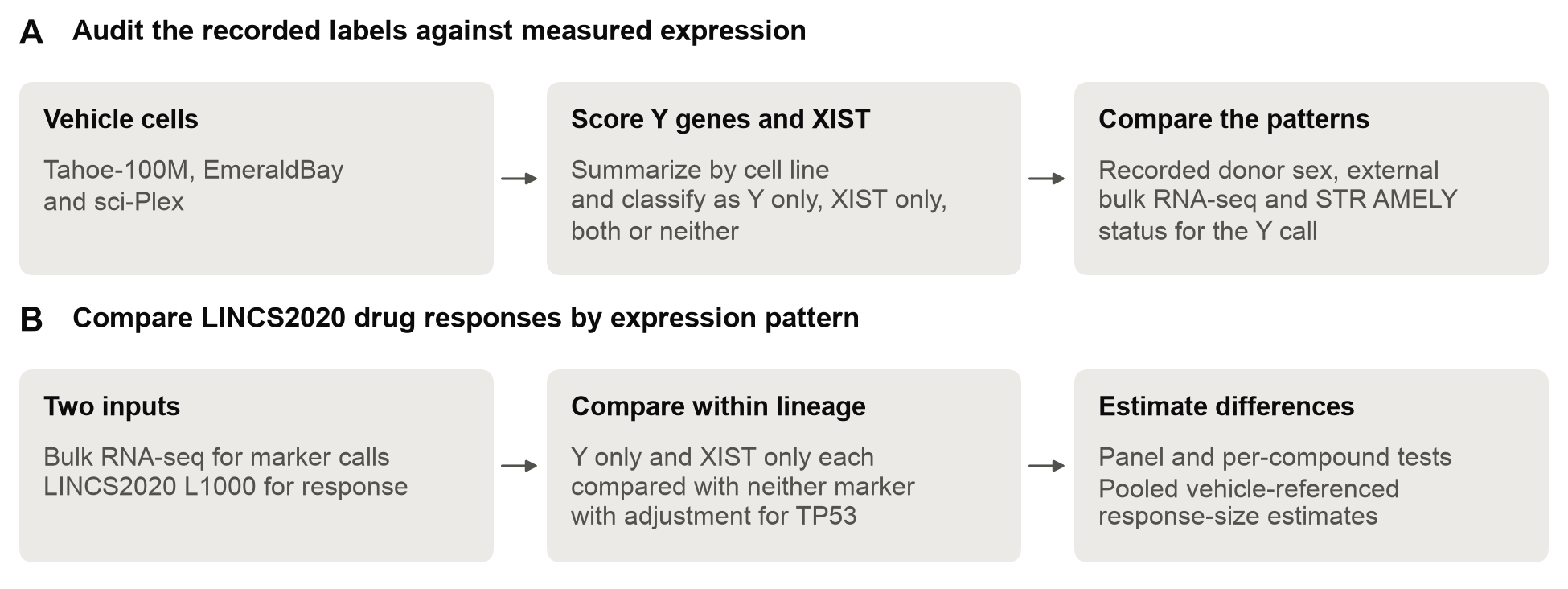
Of 49 Tahoe-100M cell lines with a recorded donor sex, 27 lacked the expected Y-gene or XIST expression pattern. Bulk RNA sequencing from other cultures agreed with the measured patterns in 47 of 49 lines. The study compiled expression records for 1,123 cell lines.
My part was the CMap and GTEx screen that came first (50 compounds, 44 tissues) and checking the GTEx sign convention. The Tahoe-100M and LINCS2020 analyses were planned, coded and run with Claude Code and rerun with OpenAI Codex, as the manuscript’s AI-use statement describes. Dr. Ben Guebila advised on the study design.
Methods
The Tahoe analysis scored eight Y-chromosome genes and XIST in vehicle-treated cells. The LINCS2020 analysis compared drug responses within 11 lineages using marker calls from bulk RNA sequencing. The CMap and GTEx screen covered 50 compounds and 44 tissues.